For parents stuck in their toddler's room every night
The 11-Word Goodnight That Helps Toddlers Fall Asleep on Their Own
If you've tried everything and nothing works, this gentle plan helps your toddler stay in bed after you say goodnight, so you can finally get your evenings back.
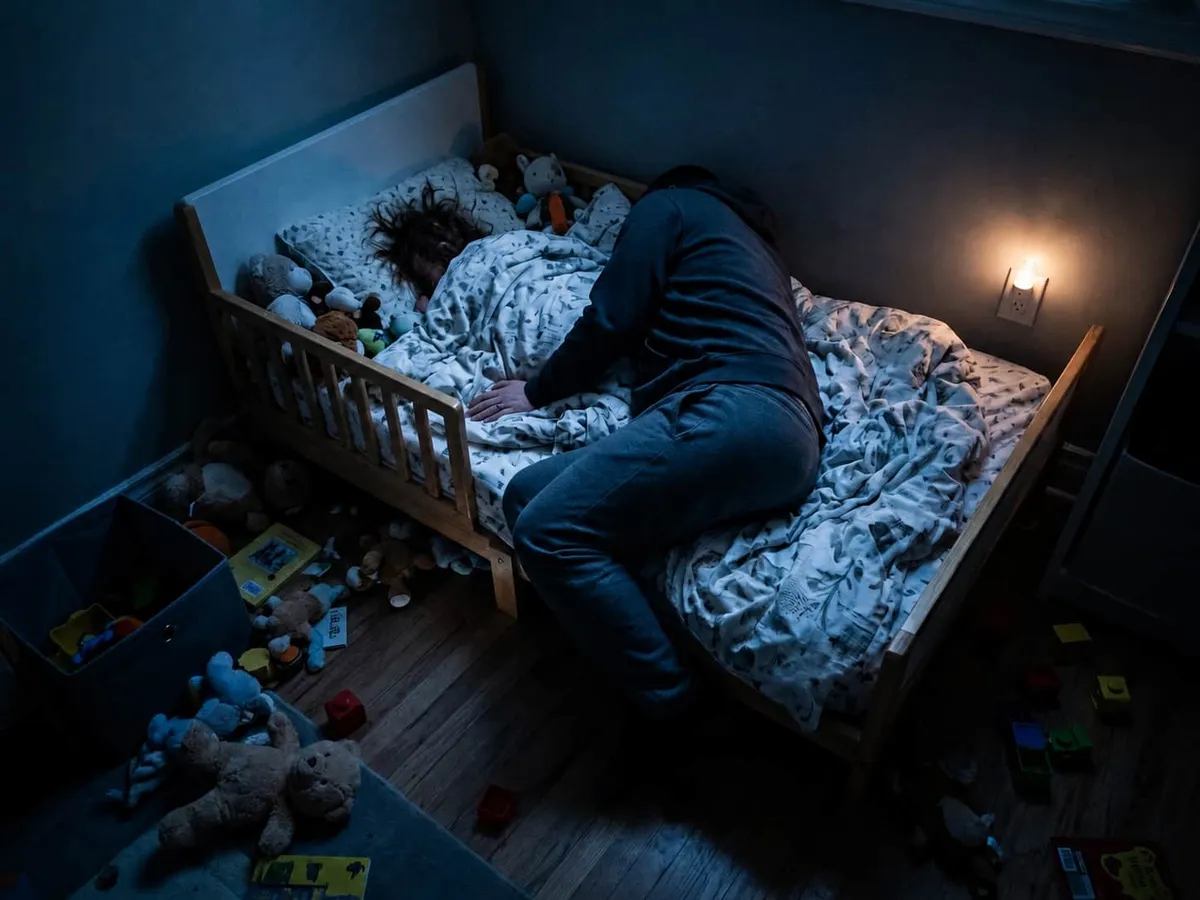
For parents stuck in their toddler's room every night
The 11-Word Goodnight That Helps Toddlers Fall Asleep on Their Own
If you've tried everything and nothing works, this gentle plan helps your toddler stay in bed after you say goodnight, so you can finally get your evenings back.
It's 9:40 p.m.
You started the bedtime routine at 7:30.
Bath.
Pajamas.
Teeth.
Two books, because one was "not enough."
A cup of water.
Another hug.
Then you stand up to leave.
And it all falls apart.
"Mommy, stay!"
The crying.
The little feet on the floor the second the door closes.
So you lie down next to them "just for a minute."
Forty minutes later, you're still there.
Frozen in the dark.
Scared to move.
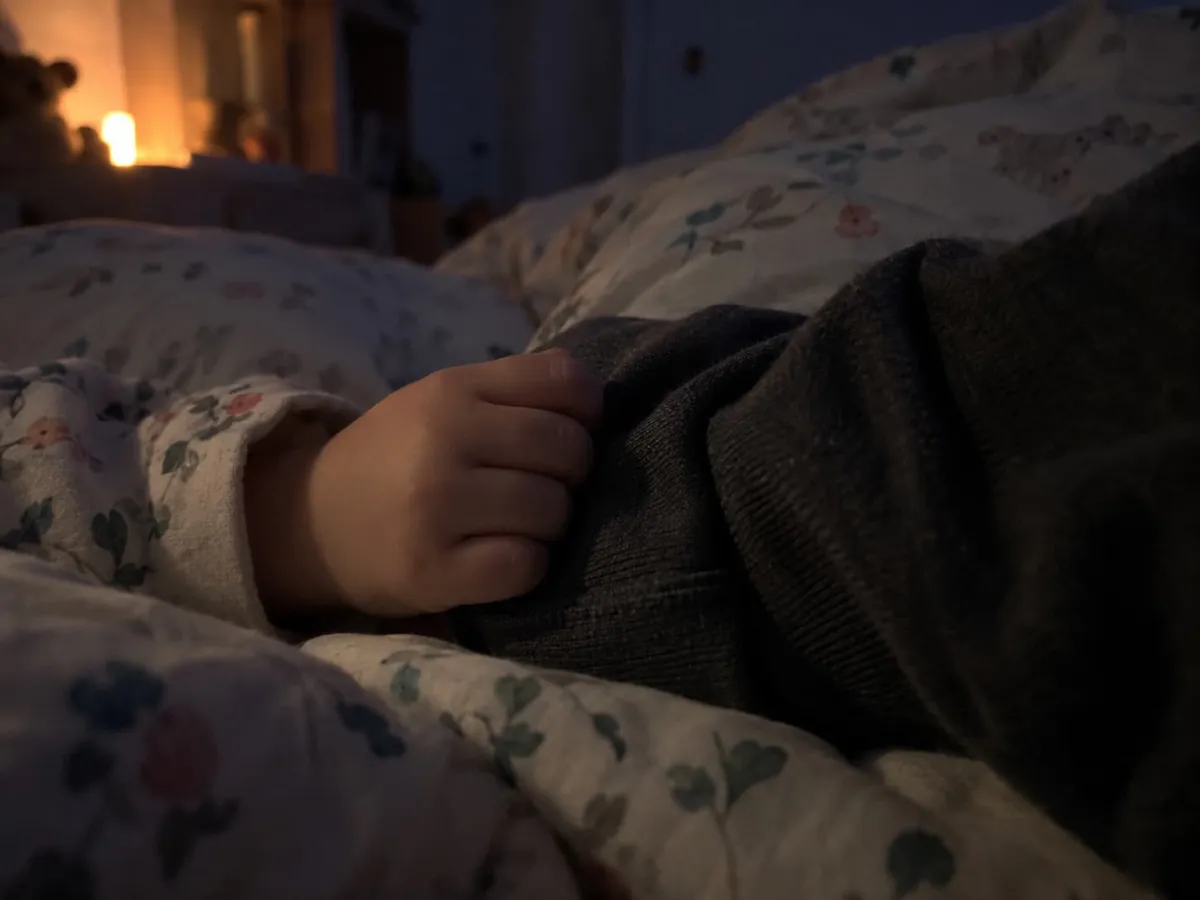
By the time you get out, the evening is gone.
And you feel guilty, because somewhere around 9 p.m. you heard your voice get sharp.
If that's your house, I want you to know something...
It's not your fault.
Your child isn't a "bad sleeper."
And you're not doing it wrong.
There's a simple reason bedtime falls apart at that exact moment.
The moment you stand up to leave.
And it has nothing to do with bedtime being too early, too late or too long.
It has to do with something your toddler has learned to need, just to fall asleep.
More on that in a second.
Because once you see it, the fix is surprisingly simple.
No lying down for an hour.
No yelling.
No bribes, reward charts or special clocks.
Just 11 short, warm words at the bedroom door.
The same words, the same way, every night.
So bedtime becomes a goodbye your toddler can trust.
And slowly, they learn to fall asleep on their own, knowing you're close.
Sounds too good to be true?
I thought so too.
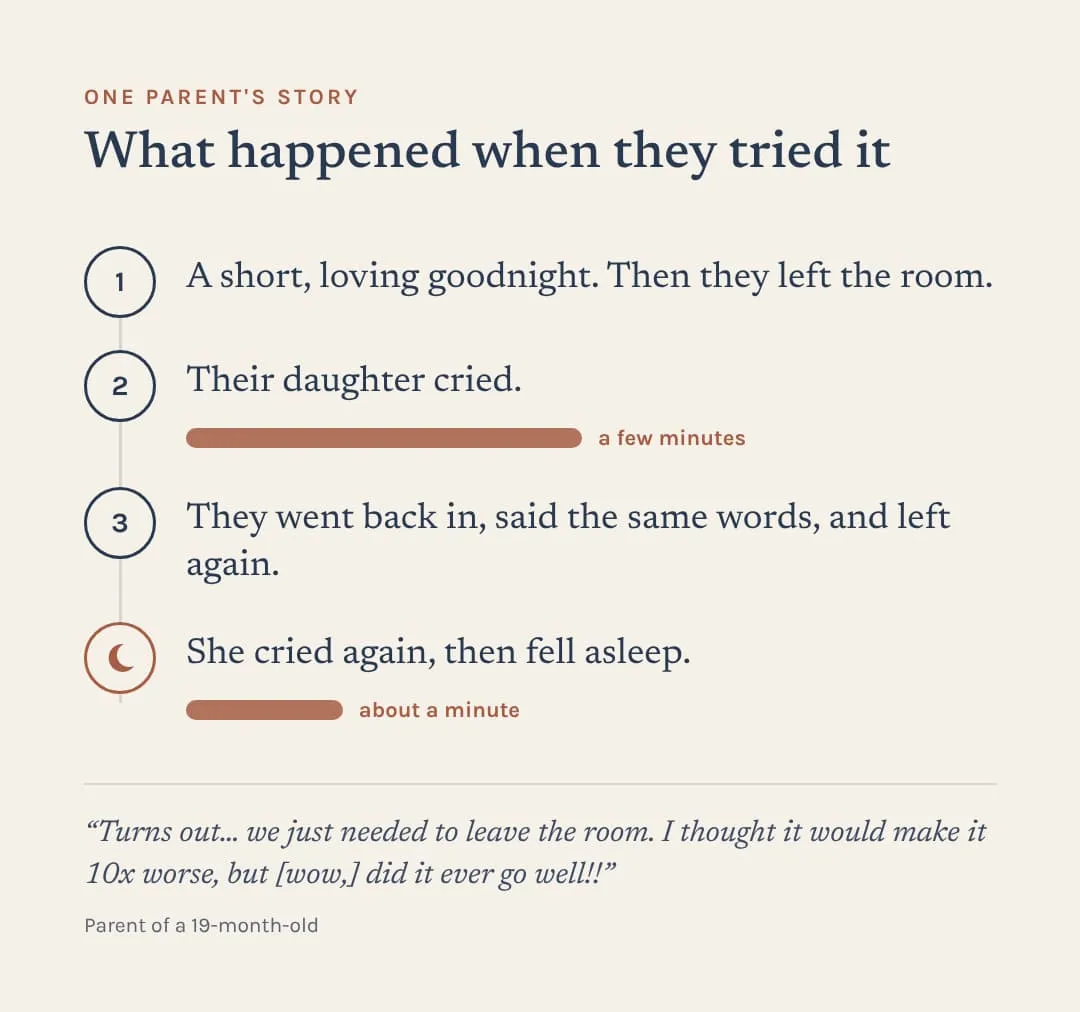
So did one mom of a 19-month-old who used the method.
She was scared that leaving the room would mean "way more abandonment and crying."
Then she tried it.
A short, loving goodnight. Then she left.
Her daughter cried for a few minutes.
So she went back in, said the same words, and left again.
This time her daughter cried for about a minute, and fell asleep.
In her words: "Turns out… we just needed to leave the room. I thought it would make it 10x worse."
Not every child settles that fast.
But the reason it worked is the same for almost every toddler.
So what has your toddler learned to need?
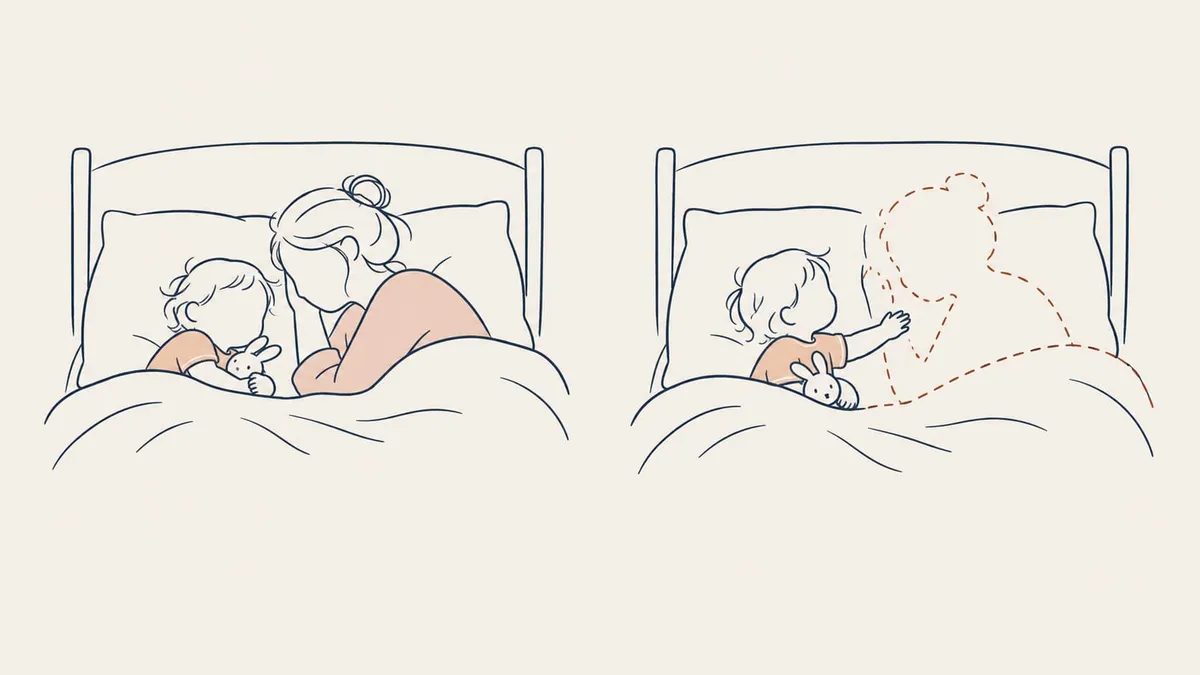
Imagine you fall asleep tonight with your head on your favorite pillow.
Now imagine that, as you drift off, someone quietly slides it away.
You'd wake up.
You'd feel around for it.
If you couldn't find it, you'd get up and go looking.
That's bedtime for a lot of toddlers.
Except the pillow is you.
It's 9:40 p.m.
You started the bedtime routine at 7:30.
Bath.
Pajamas.
Teeth.
Two books, because one was "not enough."
A cup of water.
Another hug.
Then you stand up to leave.
And it all falls apart.
"Mommy, stay!"
The crying.
The little feet on the floor the second the door closes.
So you lie down next to them "just for a minute."
Forty minutes later, you're still there.
Frozen in the dark.
Scared to move.
By the time you get out, the evening is gone.
And you feel guilty, because somewhere around 9 p.m. you heard your voice get sharp.
If that's your house, I want you to know something...
It's not your fault.
Your child isn't a "bad sleeper."
And you're not doing it wrong.
There's a simple reason bedtime falls apart at that exact moment.
The moment you stand up to leave.
And it has nothing to do with bedtime being too early, too late or too long.
It has to do with something your toddler has learned to need, just to fall asleep.
More on that in a second.
Because once you see it, the fix is surprisingly simple.
No lying down for an hour.
No yelling.
No bribes, reward charts or special clocks.
Just 11 short, warm words at the bedroom door.
The same words, the same way, every night.
So bedtime becomes a goodbye your toddler can trust.
And slowly, they learn to fall asleep on their own, knowing you're close.
Sounds too good to be true?
I thought so too.
So did one mom of a 19-month-old who used the method.
She was scared that leaving the room would mean "way more abandonment and crying."
Then she tried it.
A short, loving goodnight. Then she left.
Her daughter cried for a few minutes.
So she went back in, said the same words, and left again.
This time her daughter cried for about a minute, and fell asleep.
In her words: "Turns out… we just needed to leave the room. I thought it would make it 10x worse."
Not every child settles that fast.
But the reason it worked is the same for almost every toddler.
So what has your toddler learned to need?
Imagine you fall asleep tonight with your head on your favorite pillow.
Now imagine that, as you drift off, someone quietly slides it away.
You'd wake up.
You'd feel around for it.
If you couldn't find it, you'd get up and go looking.
That's bedtime for a lot of toddlers.
Except the pillow is you.
Falling asleep is something children learn.
Whatever is there while they drift off becomes part of how they fall asleep.
Sleep specialists call these "sleep associations."
A feed. A song. Rocking. A parent lying right next to them.
So when you stand up to leave, something they need to fall asleep is about to disappear.
Of course they call out.
Of course they climb out of bed and follow you.
Of course they ask for one more drink, one more book, one more hug.
One mom said it perfectly: "All her delay tactics center around keeping us with her as long as possible."
And there's a second reason. Bedtime is a goodbye.
It's the longest time your toddler spends apart from you all day.
Worries about being apart from a parent are very common from late in the first year until about age 3.
So when the goodbye is different every night, it never feels settled.
Some nights you stay until they're asleep.
Some nights you leave after one book.
Some nights a cry brings you back with water.
Other nights, with a cuddle.
Or with a sharp voice.
That's not naughty.
It's love, and it's learning.
That's why the usual fixes don't stick.
You've probably been told to try them all.
Move bedtime later, or earlier.
Lie down with them until they fall asleep.
Check in every five minutes.
Buy a reward chart, or a special clock.
One mom said moving bedtime later just made her daughter overtired, and it got WORSE.
Another lay frozen in the dark, because her daughter woke at the slightest movement.
Another tried walking her son back to bed in silence.
He turned it into a game.
Every one of these fixes has the same problem.
They either keep you in the picture as the pillow.
Or they change the goodbye from one night to the next.
And every night you lie down "just this once," you become a little more of the pillow.
My name is Adam. I'm a dad of two, and I'm not a sleep expert.
I'm not a nurse.
And for a long time, my wife and I had no bedtime method at all.
We just survived it.
Every night, one of us would go into the kids' room.
And come out an hour later.
Sometimes two.
Tired.
Too exhausted to even talk.
We held each other up.
That was our whole plan.
But for more than 11 years, my job has been fixing systems that keep breaking.
In IT, when something fails every night, you don't guess.
You find the exact point where it breaks.
Then you look at what the people who fixed it actually did.
So I did the same with bedtime.
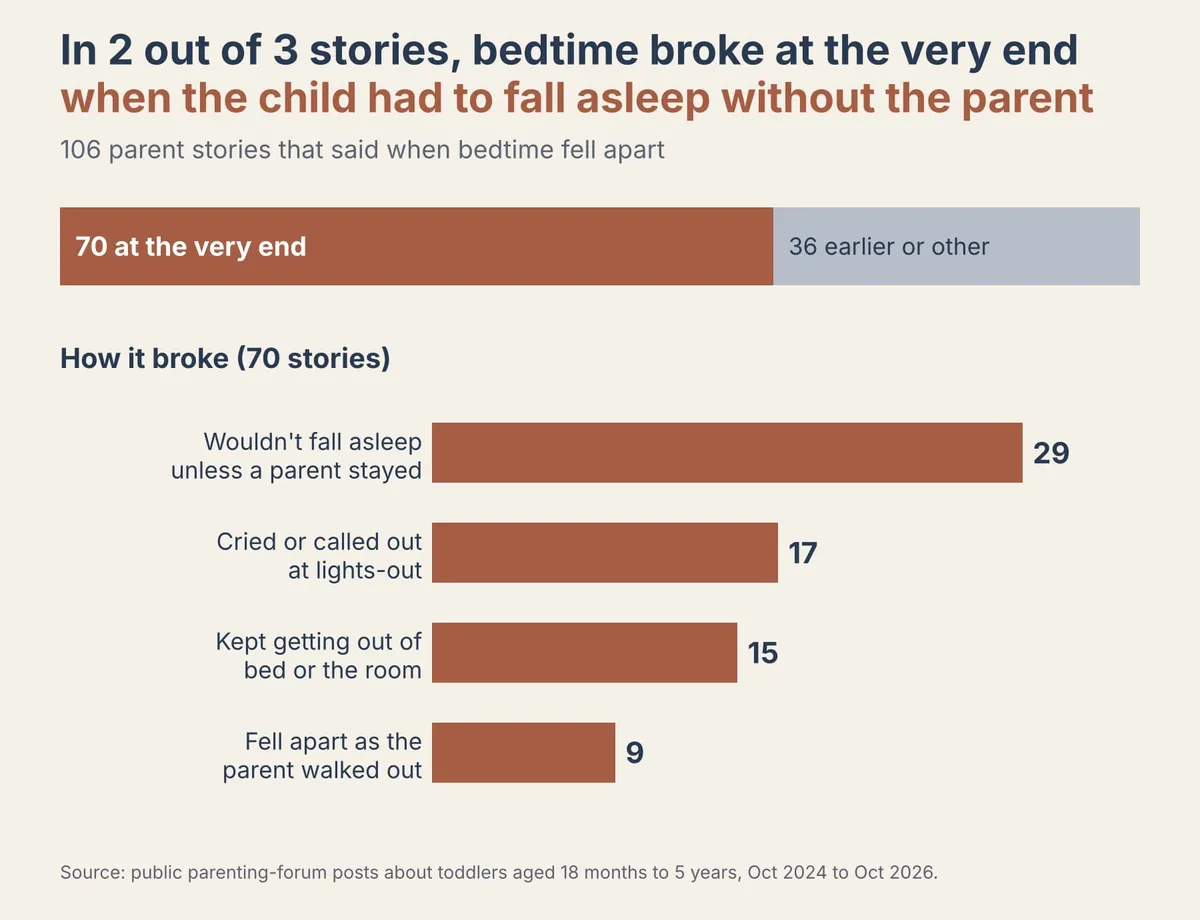
I read 150 detailed stories from parents of toddlers.
Where bedtime broke.
What they tried.
Why it failed.
And what finally worked.
In most of the stories where I could tell, bedtime didn't break during the bath, the books or getting into bed.
It broke at the very end.
When the parent tried to leave, and the child had to fall asleep without them.
Then I checked what the families who got through it did against the research.
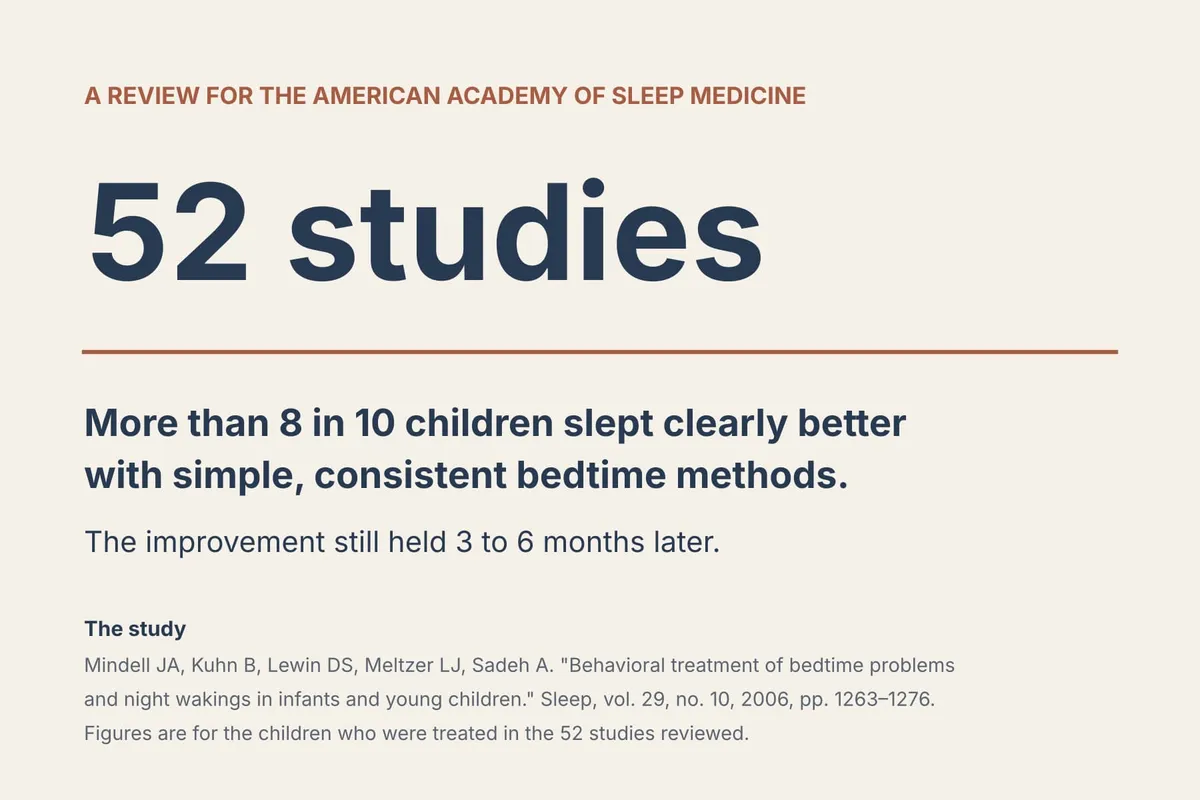
Sleep scientists have tested calm, simple methods like theirs in more than 50 studies.
In one big review, about 8 in 10 children's sleep improved.
The families who got through it weren't stricter.
Their kids weren't easier.
They gave bedtime the same calm goodbye, every night.
And they let their child learn to fall asleep without them.
So I turned what those families did into one simple method.
I call it The Easy Goodnight Method.
It has three parts.
Each one does one job.
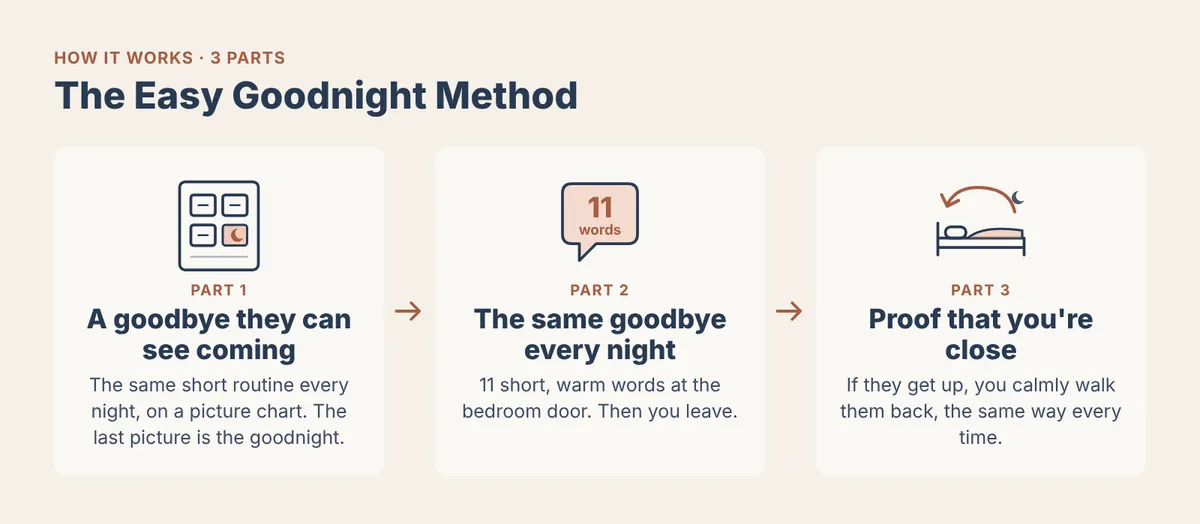
Part 1: A goodbye they can see coming.
The same short routine every night, on a picture chart your toddler can follow.
The last picture is the goodnight.
No surprises.
Part 2: The same goodbye every night.
The 11-Word Goodnight.
Eleven short, warm words.
Said the same way, in the same place, every night.
Then you leave.
After a few nights, those words become your child's signal that the day is over, and that they're safe.
Part 3: Proof that you're close.
If they get up, you calmly walk them back.
You say the same 11 words once.
And you leave.
Every time.
They learn that you're there.
And that bedtime still ends the same way.
That's it.
And if your child truly panics the moment you stand up, there's a gentler way in.
You stay close, and step back a little at a time, until they're falling asleep on their own.
Your first small win comes on Night 1.
Not a silent bedroom.
I won't promise you that.
The first nights are often louder before they get quieter.
But on Night 1, bedtime ends the way it will end from now on.
You stop bargaining.
You stop guessing.
And you know exactly what to do the next time those little feet hit the floor.
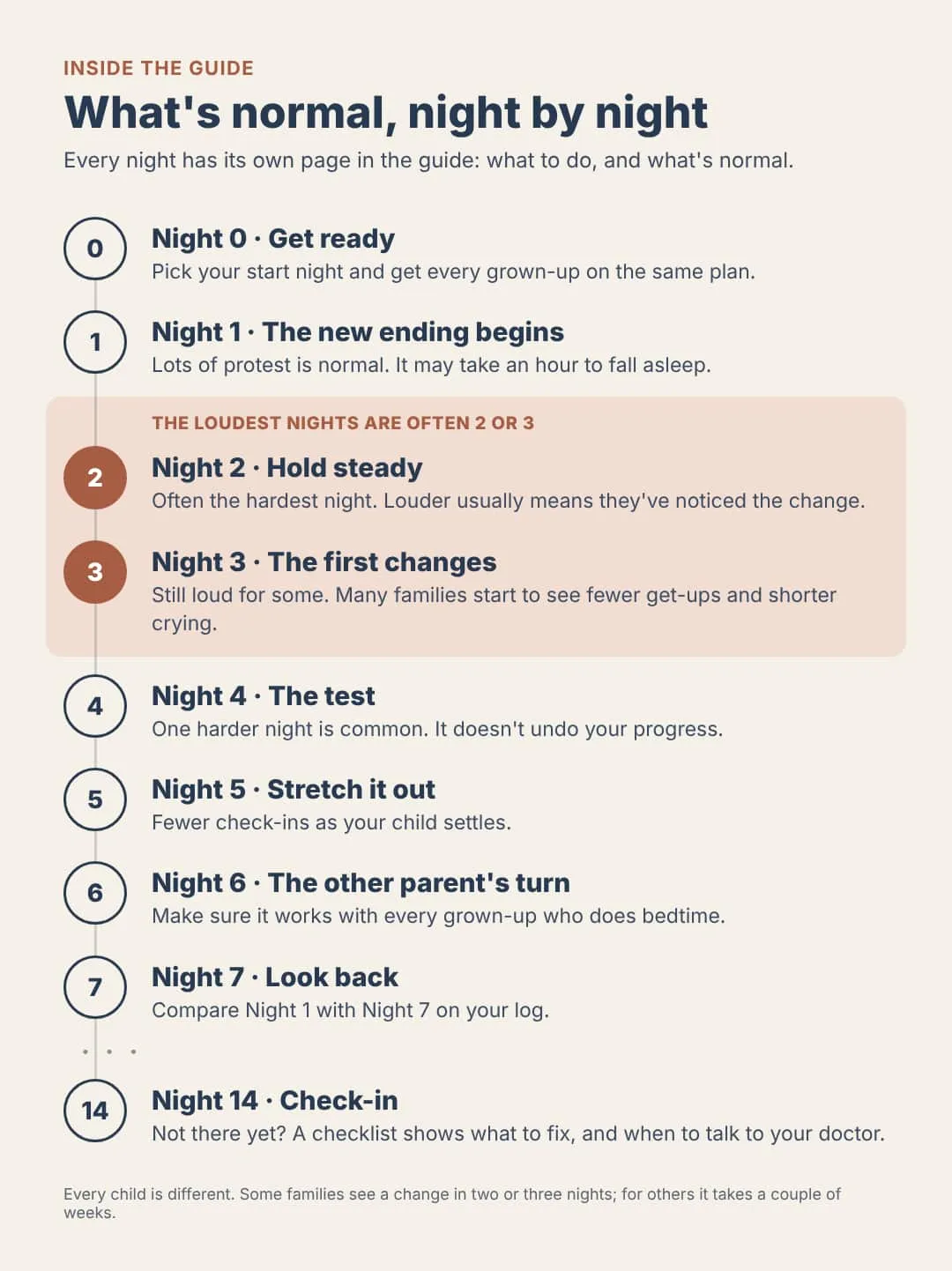
Several parents who used this method saw bedtime change in two or three nights.
For others it took a couple of weeks.
That's why the method tells you what's normal on each night, and what to do if it isn't working yet.
So you're never guessing at 9 p.m.
Introducing The Easy Goodnight Method
I put everything into one simple guide.
Not a 70-page textbook.
You only need the first 4 short chapters to start.
They take about 20 minutes.
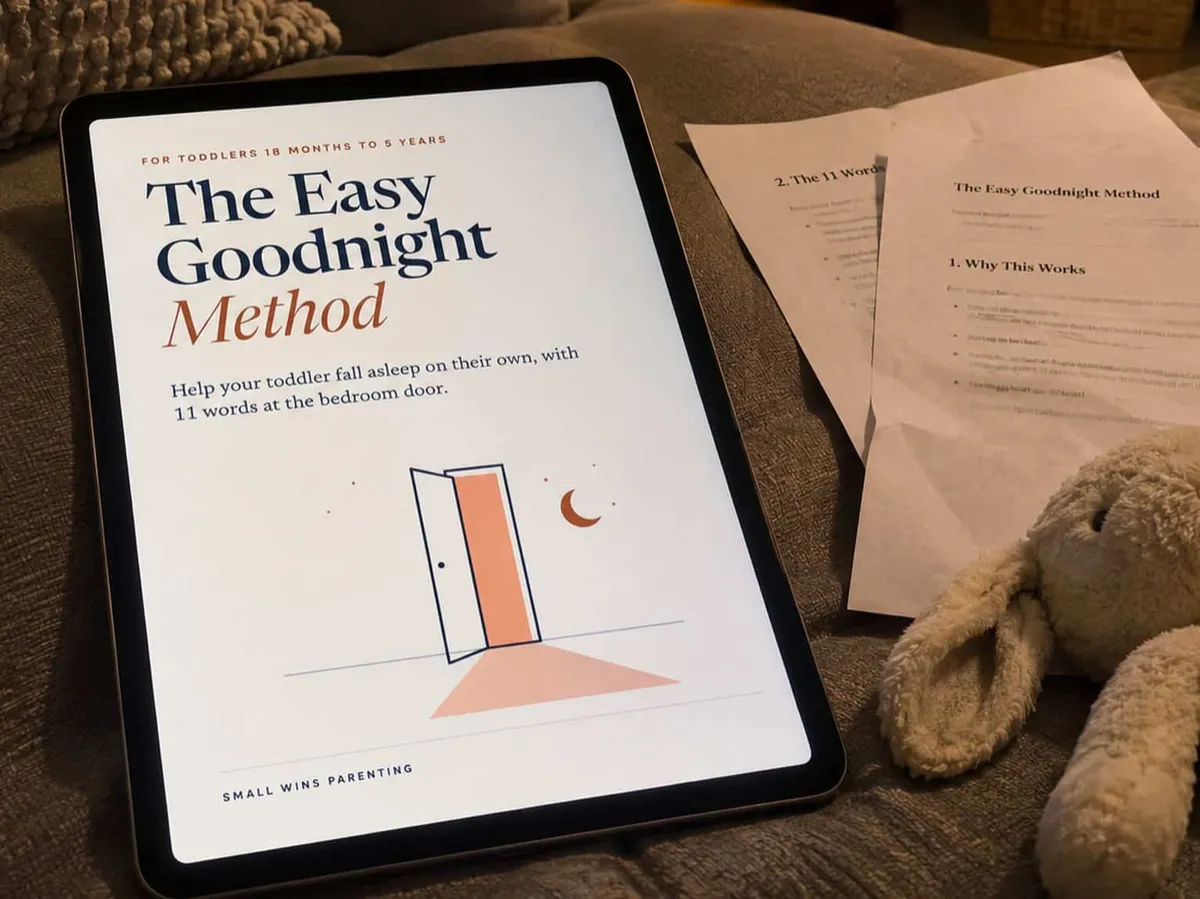
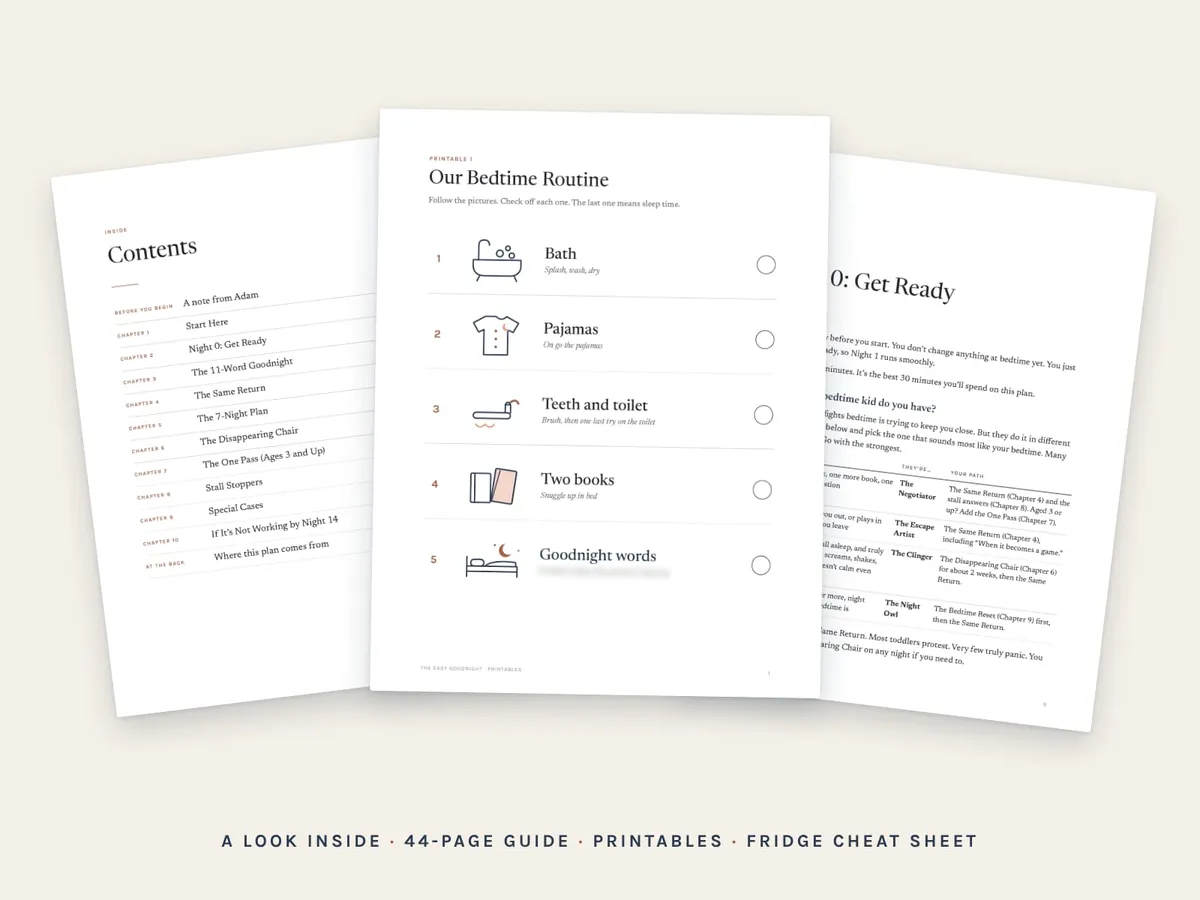
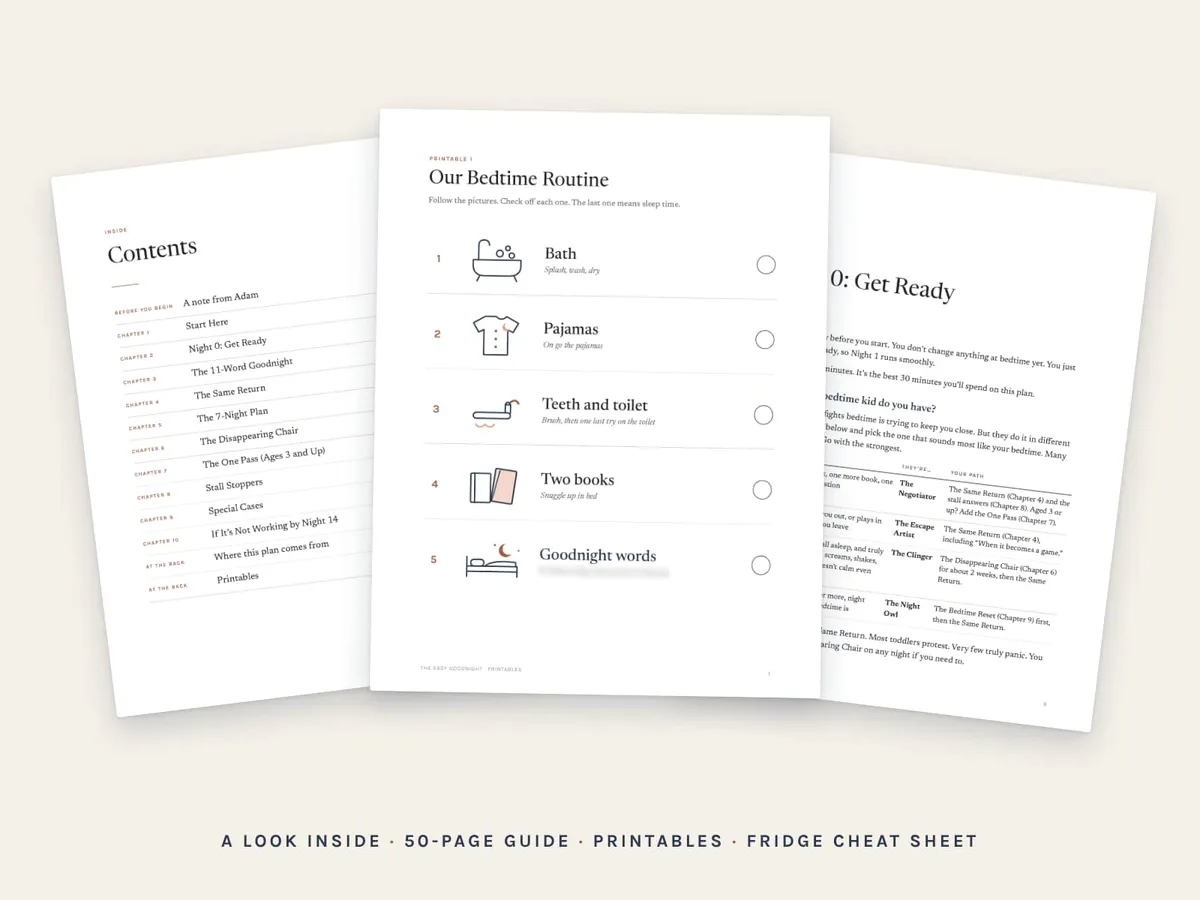
Here's some of what's inside:
• The missing pillow: why bedtime falls apart the moment you stand up, and what it means for how you say goodnight (page 5)
• The 1-minute check that shows you which path fits your child (page 9)
• The 11-Word Goodnight: the exact words, why each part works, and the 4 mistakes that quietly break them (page 13)
• The 5-step Same Return for when they get out of bed, plus what to do when they think it's a game (pages 16–18)
• "Praise checks": the small trick that rewards staying in bed instead of crying (page 18)
• Why Night 2 is often the hardest, and the one thing to do that night so you don't undo everything (page 21)
• The Disappearing Chair: the gentle path for toddlers who truly panic, so you never have to leave a panicking child (page 25)
• The One Pass: a little card your child can "spend" once a night on one last drink, hug or question. In studies with 3- to 6-year-olds, it cut down on calling out and getting out of bed (page 28)
• Short answers to the 10 most common stalls, from "I need water" to "I'm scared" (pages 32–33)
• Plus the special cases: a child who isn't tired yet, feeding to sleep, "only wants Mom", the move to a big bed, a new baby, and night waking (pages 34–38)
• The "Not Working Yet?" checklist for Night 14, and when to talk to your doctor (pages 39–41)
It's made for healthy toddlers aged 18 months to 5 years.
So now let me ask you this...
What would it be worth to you to say goodnight once, and mean it?
To walk out of that room without the crying and the bargaining?
To sit on the couch by 8:30 p.m. with your partner?
To end the day calm, instead of angry and guilty?
Private sleep consultants often charge hundreds of dollars for help like this.
And for many parents, that's just not possible.
Keeping this behind a big price tag felt wrong to me.
That's why you won't pay $297 for this.
Not $197.
Not $97.
Not even $47.
The regular price is just $27.
But because this is a brand-new guide, I'm making it even easier.
Right now you can get it for just $17.
Here's the honest reason it's cheaper.
You're one of the first families to use it.
And I'd rather you get one small win at bedtime first, and see that it works, than pay a lot up front.
All I ask is this.
When bedtime gets easier, remember who helped you get there.

You'll also get two printable extras, free:
Extra 1: The Printables Pack. A picture routine chart your toddler can follow (ready-made, and a blank one to make your own), a Family Bedtime Agreement so every grown-up does it the same way, a 14-Night Log, and One Pass cards to cut out.
Extra 2: The Fridge Cheat Sheet. The 11 words, the Same Return and every stall answer on one page. Stick it on the fridge, so nobody has to remember the right words at 9 p.m.
Getting started takes about one minute.
Click the button on this page.
You'll go to a secure checkout page.
Enter your email and payment details.
As soon as you order, you'll get an email with your guide, the printables and the cheat sheet.
You can read the first 4 chapters tonight, and start tomorrow.
So, are you ready?
Are you ready to give your child a goodbye they can trust?
Are you ready to stop lying in the dark, scared to move?
Are you ready for bedtime to be the calmest part of your day, instead of the hardest?
Are you ready to walk out of that room, and hear nothing but quiet?
Don't make the mistake we made, and spend years just surviving bedtime.
These years go fast.
The evenings shouldn't feel this long.
You're protected by my 30-day money-back guarantee.

Try the plan for 30 days.
That's enough time to do the 7 nights, and the 14-night check.
If it doesn't help, just email me.
I'll refund every cent.
No questions asked.
And yes, I really do give refunds.
Every child is different, and if this isn't right for yours, I'd rather give your money back than keep it.
So I'm not asking you for a yes.
Just a maybe.
Let's recap.
You've seen why bedtime falls apart the moment you stand up.
You've seen how 11 words and one calm response turn it into a goodbye your child can trust.
And I've done everything I can to make it easy to try, for just $17, with a 30-day guarantee.
Now you have three options...
Option 1: Do nothing.
Keep doing what you're doing, and hope bedtime gets easier on its own.
Option 2: Figure it out yourself.
Read forum posts at 11 p.m., like I did, and try to piece it together.
Option 3: Let me do the heavy lifting for you.
Get the plan I built from 150 parents' stories and decades of sleep research.
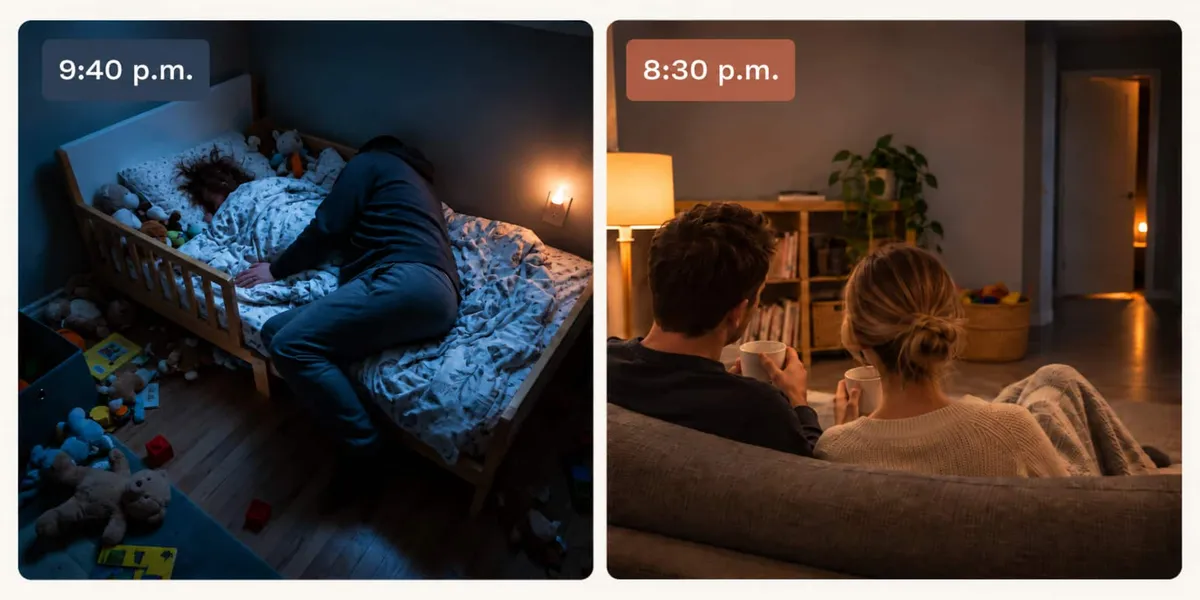
Remember, 7 nights from now, you can still be lying in the dark at 9:40 p.m., scared to move.
Or you can be on the couch, the house quiet, knowing tomorrow night will end the same way.
The choice is yours.
Talk soon,
Adam
Questions parents ask
How is this different from other sleep guides?
Most guides give you several methods and leave you to choose.
This is one plan built around one moment: when you say goodnight and leave. It starts with a 1-minute check that shows you which path fits your child. It's made for healthy toddlers from about 18 months to 5 years.
Do I have to leave my child to cry?
No. You walk them back calmly every time they get up. And if your child truly panics when you stand up, the Disappearing Chair lets you stay close and step back slowly.
How fast will I see a change?
Some families see a change in two or three nights. For others it takes a couple of weeks. The first nights are often louder before they get quieter. The guide tells you what's normal each night, and what to check if it isn't working by Night 14. And if it doesn't help, email me within 30 days for a full refund.
My child still nurses or has a bottle to fall asleep. Will it work?
Yes. You don't have to stop the feed. The guide shows you how to move it to the start of the routine, a few nights before you begin.
My partner and I do bedtime differently. Does that matter?
It's one of the most common reasons bedtime plans fail. The Family Bedtime Agreement takes 10 minutes and gets every grown-up doing the same thing. And if your child only wants one of you, the guide has a 4-stage handoff.
Is this medical advice?
No. It's general parenting information for healthy toddlers. If your child snores loudly, stops breathing in their sleep, is unwell, or has a medical or developmental condition, talk to your doctor first.
How do I get it?
Click the button, check out on the secure page, and the guide, printables and cheat sheet arrive in your inbox right away. If you need help, email [email protected].
$27 $17 One time payment
P.S. You don't need to stay in the room until they fall asleep. You need a goodbye your child can trust. That's 11 words, and $17, with 30 days to see it work.
Falling asleep is something children learn.
Whatever is there while they drift off becomes part of how they fall asleep.
Sleep specialists call these "sleep associations."
A feed. A song. Rocking. A parent lying right next to them.
So when you stand up to leave, something they need to fall asleep is about to disappear.
Of course they call out.
Of course they climb out of bed and follow you.
Of course they ask for one more drink, one more book, one more hug.
One mom said it perfectly: "All her delay tactics center around keeping us with her as long as possible."
And there's a second reason. Bedtime is a goodbye.
It's the longest time your toddler spends apart from you all day.
Worries about being apart from a parent are very common from late in the first year until about age 3.
So when the goodbye is different every night, it never feels settled.
Some nights you stay until they're asleep.
Some nights you leave after one book.
Some nights a cry brings you back with water.
Other nights, with a cuddle.
Or with a sharp voice.
That's not naughty.
It's love, and it's learning.
That's why the usual fixes don't stick.
You've probably been told to try them all.
Move bedtime later, or earlier.
Lie down with them until they fall asleep.
Check in every five minutes.
Buy a reward chart, or a special clock.
One mom said moving bedtime later just made her daughter overtired, and it got WORSE.
Another lay frozen in the dark, because her daughter woke at the slightest movement.
Another tried walking her son back to bed in silence.
He turned it into a game.
Every one of these fixes has the same problem.
They either keep you in the picture as the pillow.
Or they change the goodbye from one night to the next.
And every night you lie down "just this once," you become a little more of the pillow.
My name is Adam. I'm a dad of two, and I'm not a sleep expert.
I'm not a nurse.
And for a long time, my wife and I had no bedtime method at all.
We just survived it.
Every night, one of us would go into the kids' room.
And come out an hour later.
Sometimes two.
Tired.
Too exhausted to even talk.
We held each other up.
That was our whole plan.
But for more than 11 years, my job has been fixing systems that keep breaking.
In IT, when something fails every night, you don't guess.
You find the exact point where it breaks.
Then you look at what the people who fixed it actually did.
So I did the same with bedtime.
I read 150 detailed stories from parents of toddlers.
Where bedtime broke.
What they tried.
Why it failed.
And what finally worked.
In most of the stories where I could tell, bedtime didn't break during the bath, the books or getting into bed.
It broke at the very end.
When the parent tried to leave, and the child had to fall asleep without them.
Then I checked what the families who got through it did against the research.
Sleep scientists have tested calm, simple methods like theirs in more than 50 studies.
In one big review, about 8 in 10 children's sleep improved.
The families who got through it weren't stricter.
Their kids weren't easier.
They gave bedtime the same calm goodbye, every night.
And they let their child learn to fall asleep without them.
So I turned what those families did into one simple method.
I call it The Easy Goodnight Method.
It has three parts.
Each one does one job.
Part 1: A goodbye they can see coming.
The same short routine every night, on a picture chart your toddler can follow.
The last picture is the goodnight.
No surprises.
Part 2: The same goodbye every night.
The 11-Word Goodnight.
Eleven short, warm words.
Said the same way, in the same place, every night.
Then you leave.
After a few nights, those words become your child's signal that the day is over, and that they're safe.
Part 3: Proof that you're close.
If they get up, you calmly walk them back.
You say the same 11 words once.
And you leave.
Every time.
They learn that you're there.
And that bedtime still ends the same way.
That's it.
And if your child truly panics the moment you stand up, there's a gentler way in.
You stay close, and step back a little at a time, until they're falling asleep on their own.
Your first small win comes on Night 1.
Not a silent bedroom.
I won't promise you that.
The first nights are often louder before they get quieter.
But on Night 1, bedtime ends the way it will end from now on.
You stop bargaining.
You stop guessing.
And you know exactly what to do the next time those little feet hit the floor.
Several parents who used this method saw bedtime change in two or three nights.
For others it took a couple of weeks.
That's why the method tells you what's normal on each night, and what to do if it isn't working yet.
So you're never guessing at 9 p.m.
Introducing The Easy Goodnight Method
I put everything into one simple guide.
Not a 70-page textbook.
You only need the first 4 short chapters to start.
They take about 20 minutes.
Here's some of what's inside:
• The missing pillow: why bedtime falls apart the moment you stand up, and what it means for how you say goodnight (page 5)
• The 1-minute check that shows you which path fits your child (page 9)
• The 11-Word Goodnight: the exact words, why each part works, and the 4 mistakes that quietly break them (page 13)
• The 5-step Same Return for when they get out of bed, plus what to do when they think it's a game (pages 16–18)
• "Praise checks": the small trick that rewards staying in bed instead of crying (page 18)
• Why Night 2 is often the hardest, and the one thing to do that night so you don't undo everything (page 21)
• The Disappearing Chair: the gentle path for toddlers who truly panic, so you never have to leave a panicking child (page 25)
• The One Pass: a little card your child can "spend" once a night on one last drink, hug or question. In studies with 3- to 6-year-olds, it cut down on calling out and getting out of bed (page 28)
• Short answers to the 10 most common stalls, from "I need water" to "I'm scared" (pages 32–33)
• Plus the special cases: a child who isn't tired yet, feeding to sleep, "only wants Mom", the move to a big bed, a new baby, and night waking (pages 34–38)
• The "Not Working Yet?" checklist for Night 14, and when to talk to your doctor (pages 39–41)
It's made for healthy toddlers aged 18 months to 5 years.
So now let me ask you this...
What would it be worth to you to say goodnight once, and mean it?
To walk out of that room without the crying and the bargaining?
To sit on the couch by 8:30 p.m. with your partner?
To end the day calm, instead of angry and guilty?
Private sleep consultants often charge hundreds of dollars for help like this.
And for many parents, that's just not possible.
Keeping this behind a big price tag felt wrong to me.
That's why you won't pay $297 for this.
Not $197.
Not $97.
Not even $47.
The regular price is just $27.
But because this is a brand-new guide, I'm making it even easier.
Right now you can get it for just $17.
Here's the honest reason it's cheaper.
You're one of the first families to use it.
And I'd rather you get one small win at bedtime first, and see that it works, than pay a lot up front.
All I ask is this.
When bedtime gets easier, remember who helped you get there.
You'll also get two printable extras, free:
Extra 1: The Printables Pack. A picture routine chart your toddler can follow (ready-made, and a blank one to make your own), a Family Bedtime Agreement so every grown-up does it the same way, a 14-Night Log, and One Pass cards to cut out.
Extra 2: The Fridge Cheat Sheet. The 11 words, the Same Return and every stall answer on one page. Stick it on the fridge, so nobody has to remember the right words at 9 p.m.
Getting started takes about one minute.
Click the button on this page.
You'll go to a secure checkout page.
Enter your email and payment details.
As soon as you order, you'll get an email with your guide, the printables and the cheat sheet.
You can read the first 4 chapters tonight, and start tomorrow.
So, are you ready?
Are you ready to give your child a goodbye they can trust?
Are you ready to stop lying in the dark, scared to move?
Are you ready for bedtime to be the calmest part of your day, instead of the hardest?
Are you ready to walk out of that room, and hear nothing but quiet?
Don't make the mistake we made, and spend years just surviving bedtime.
These years go fast.
The evenings shouldn't feel this long.
You're protected by my 30-day money-back guarantee.
Try the plan for 30 days.
That's enough time to do the 7 nights, and the 14-night check.
If it doesn't help, just email me.
I'll refund every cent.
No questions asked.
And yes, I really do give refunds.
Every child is different, and if this isn't right for yours, I'd rather give your money back than keep it.
So I'm not asking you for a yes.
Just a maybe.
Let's recap.
You've seen why bedtime falls apart the moment you stand up.
You've seen how 11 words and one calm response turn it into a goodbye your child can trust.
And I've done everything I can to make it easy to try, for just $17, with a 30-day guarantee.
Now you have three options...
Option 1: Do nothing.
Keep doing what you're doing, and hope bedtime gets easier on its own.
Option 2: Figure it out yourself.
Read forum posts at 11 p.m., like I did, and try to piece it together.
Option 3: Let me do the heavy lifting for you.
Get the plan I built from 150 parents' stories and decades of sleep research.
Remember, 7 nights from now, you can still be lying in the dark at 9:40 p.m., scared to move.
Or you can be on the couch, the house quiet, knowing tomorrow night will end the same way.
The choice is yours.
Talk soon,
Adam
Questions parents ask
How is this different from other sleep guides?
Most guides give you several methods and leave you to choose.
This is one plan built around one moment: when you say goodnight and leave. It starts with a 1-minute check that shows you which path fits your child. It's made for healthy toddlers from about 18 months to 5 years.
Do I have to leave my child to cry?
No. You walk them back calmly every time they get up. And if your child truly panics when you stand up, the Disappearing Chair lets you stay close and step back slowly.
How fast will I see a change?
Some families see a change in two or three nights. For others it takes a couple of weeks. The first nights are often louder before they get quieter. The guide tells you what's normal each night, and what to check if it isn't working by Night 14. And if it doesn't help, email me within 30 days for a full refund.
My child still nurses or has a bottle to fall asleep. Will it work?
Yes. You don't have to stop the feed. The guide shows you how to move it to the start of the routine, a few nights before you begin.
My partner and I do bedtime differently. Does that matter?
It's one of the most common reasons bedtime plans fail. The Family Bedtime Agreement takes 10 minutes and gets every grown-up doing the same thing. And if your child only wants one of you, the guide has a 4-stage handoff.
Is this medical advice?
No. It's general parenting information for healthy toddlers. If your child snores loudly, stops breathing in their sleep, is unwell, or has a medical or developmental condition, talk to your doctor first.
How do I get it?
Click the button, check out on the secure page, and the guide, printables and cheat sheet arrive in your inbox right away. If you need help, email [email protected].
$27 $17 One time payment
P.S. You don't need to stay in the room until they fall asleep. You need a goodbye your child can trust. That's 11 words, and $17, with 30 days to see it work.